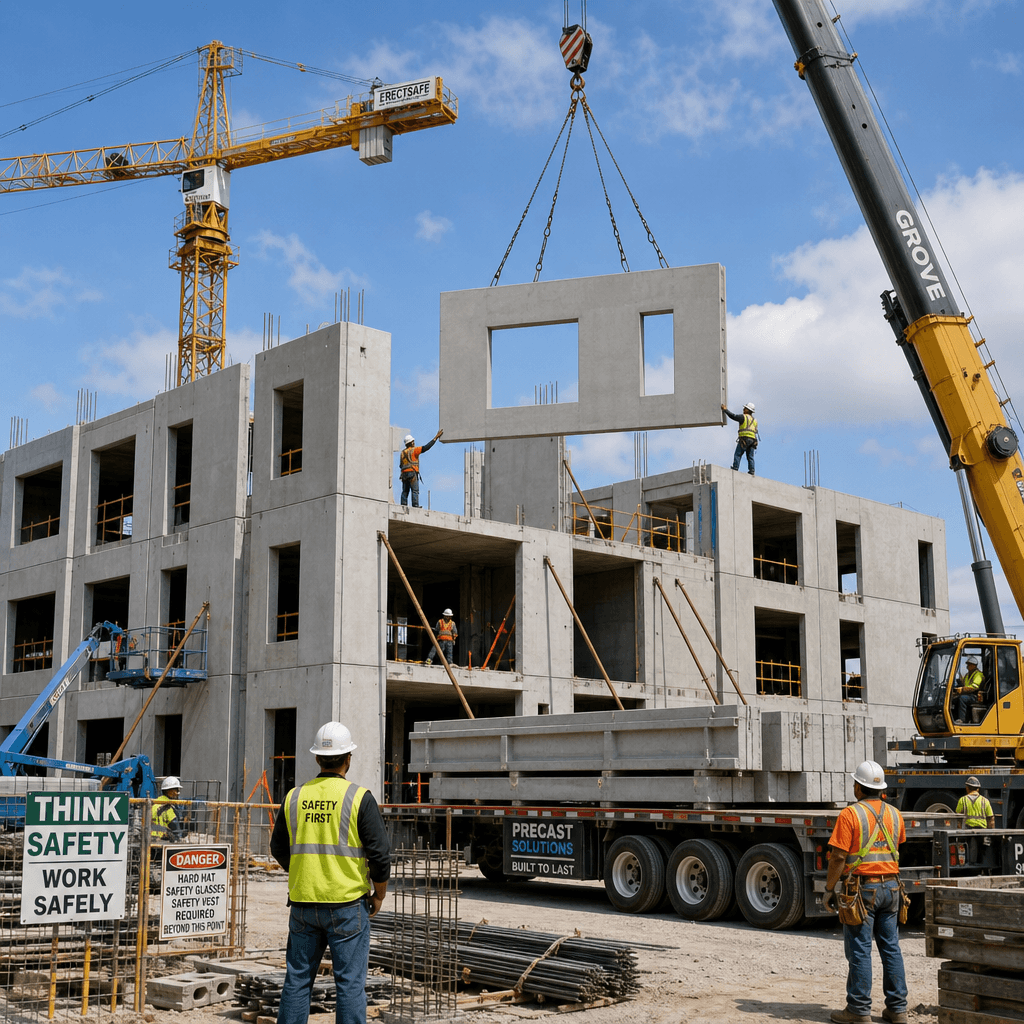

Precast concrete projects are typically associated with efficiency, control, and predictability due to the controlled conditions of off-site manufacturing. However, in practice, many projects deviate from initial plans, leading to schedule disruptions, cost increases, and reactive workflows. These issues rarely originate during production; they are usually the result of deficiencies in earlier project phases.

The Illusion of Control in Precast Projects
While precast construction relies on precision during manufacturing, overall project performance depends on upstream processes. Predictability is not solely a function of controlled production environments, but rather the result of alignment across coordination, information quality, and decision timing. When these elements are not properly integrated, inconsistencies emerge and propagate throughout the project lifecycle.
What Makes Precast Projects Unpredictable
Project unpredictability is typically not caused by a single failure, but by the accumulation of small discrepancies that remain unresolved during early stages.
Lack of Coordination
Precast projects involve multiple stakeholders, including structural engineers, architects, MEP teams, and manufacturers. Insufficient coordination between these parties leads to misaligned models, incompatible connections, and late-stage issue detection. As coordination gaps persist, the likelihood of downstream conflicts increases significantly.
Incomplete or Unclear Information
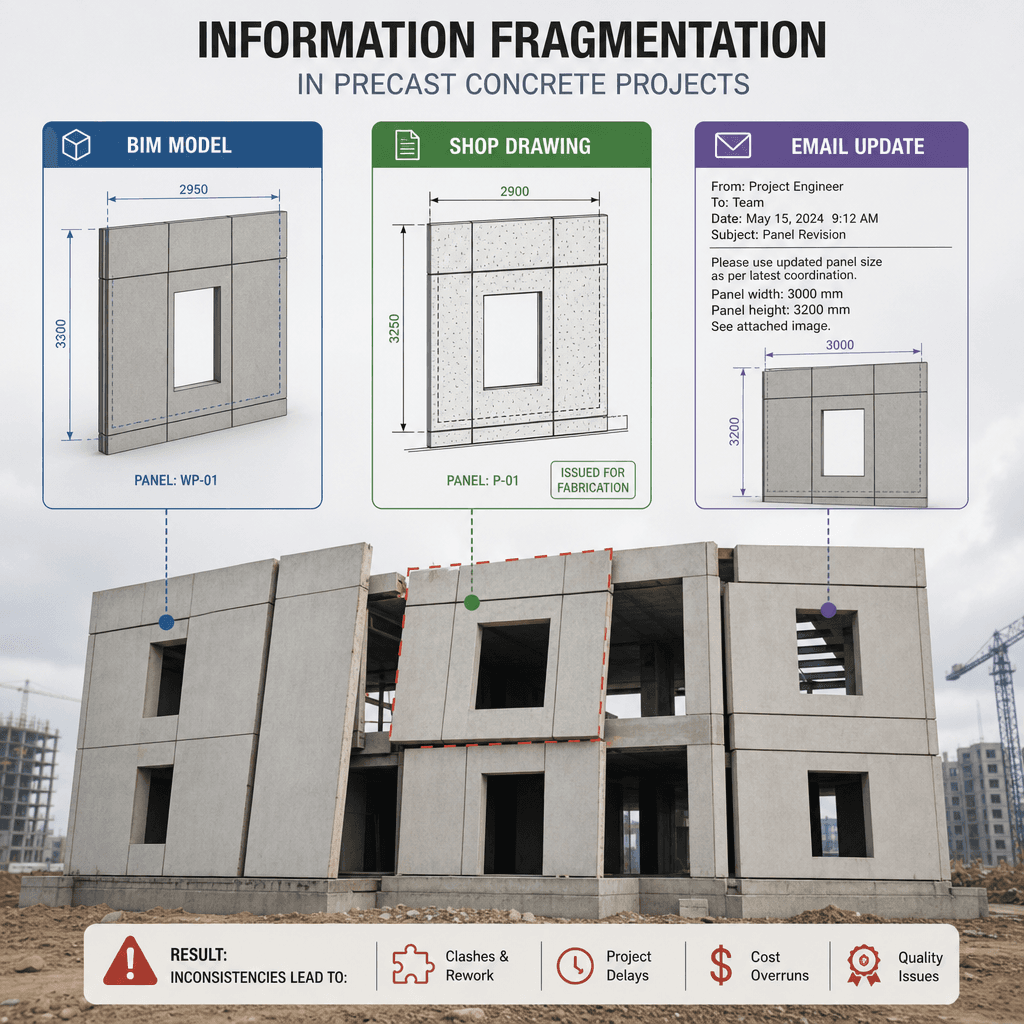
Precast decision-making depends on precise and consistent data. When project information is incomplete or ambiguous, assumptions are introduced, interpretations vary, and discrepancies arise between models and drawings. This results in rework, redesign, and production delays, ultimately reducing reliability across the entire process.
Late Decision-Making
The sequencing of decisions is critical in precast construction. Once production begins, flexibility is limited compared to traditional construction methods. Delayed decisions require model updates, shop drawing revisions, and adjustments to production schedules, generating a cascading effect that disrupts planning and execution.
The Impact on Planning, Control, and Risk
Unpredictability directly affects core aspects of project management. Planning becomes reactive due to unreliable inputs, reducing the ability to maintain a structured sequence of activities. Control diminishes as inconsistencies increase, forcing project teams to focus on issue resolution rather than progress tracking. At the same time, risk exposure rises, particularly in the form of cost overruns, delays, and on-site coordination conflicts, all of which escalate rapidly in precast environments due to their dependence on early-stage accuracy.
How to Improve Predictability in Precast Projects
Improving predictability requires a systematic approach focused on clarity and alignment across all project phases. The key elements include:
- early and continuous coordination
- complete and accurate modeling
- clear communication between stakeholders
- timely and well-structured decision-making
When these factors are consistently implemented, projects become more stable, easier to manage, and less dependent on reactive adjustments.
How Biminglabs Helps Reduce Uncertainty
At Biminglabs, the focus is placed on eliminating the gaps that generate unpredictability. This is achieved through the integration of BIM modeling, detailed coordination, and high-precision shop drawings, ensuring that all project information is aligned prior to production. In precast construction, predictability is not achieved during execution, but is established during the planning and coordination stages.

Precast projects are not inherently unpredictable; however, without proper coordination, reliable information, and timely decisions, they become increasingly difficult to control. Project outcomes are determined less by the construction system itself and more by the effectiveness of the processes that precede it. In this context, predictability must be intentionally designed through structured coordination and accurate information management.
Tags
More from the blog