

In many construction projects, a clash-free BIM model is treated as the final goal of coordination. Once the model shows no geometric conflicts, teams assume the project is ready for production and installation. But in precast concrete projects, that is rarely enough. A BIM model can be completely clash-free and still create major problems during fabrication or erection. The reason is simple: successful coordination is not only about geometry. It is about constructability.
In precast construction, real project success depends on tolerances, sequencing, connection alignment, crane access, transport limitations, and installation logic. If these factors are ignored, even a visually “perfect” model can fail once construction begins. This is one of the biggest gaps in modern BIM workflows.

Clash Detection Does Not Guarantee Buildability
Traditional clash detection only checks whether objects overlap in the model. It helps identify visible conflicts between structural, architectural, and MEP systems before construction starts. That process is important, but it does not answer critical questions such as:
- Can the element actually be fabricated efficiently?
- Are the connections accessible during installation?
- Does the erection sequence make sense?
- Were tolerances considered?
- Can installers safely access welds and bolts on-site?
A model may look coordinated digitally while creating major delays in the factory or on-site. This happens frequently in precast projects because coordination often stops at geometry instead of evaluating how the building will actually be produced and assembled.
The Real Problems Usually Appear During Installation
Many precast coordination failures are not visible in the model itself. For example, a connection may align perfectly in Revit but become impossible to weld once adjacent panels are installed. A precast beam may fit structurally but block crane access for the next erection stage. Wall panels may technically fit within the structure but create tolerance issues across multiple floors. These are constructability problems, not clash detection problems. Another common issue is sequencing. In precast installation, every element depends on a specific erection order. If sequencing is ignored during coordination, installers often face situations where elements cannot be placed safely or efficiently.
Production teams also depend heavily on reliable BIM models and accurate shop drawings. If the model contains unclear details, misaligned embeds, or unrealistic fabrication assumptions, the result is rework, delays, and wasted production time. A coordinated model should support the full workflow, not just the design stage.
Tolerances Matter More Than Many Teams Realize
One of the biggest mistakes in BIM coordination is assuming the digital model represents perfect precision. Construction does not work that way. Precast concrete projects always involve tolerances in fabrication, erection, and structural alignment. Even small dimensional variations can accumulate across a project and create installation conflicts.
A clash-free model that ignores tolerances can still produce:
- Misaligned connections
- Uneven bearing conditions
- Difficult panel installation
- Excessive on-site adjustments
Good BIM coordination must reflect real construction conditions, not only theoretical geometry.
BIM Coordination Needs to Evolve
As precast projects become more complex, BIM workflows need to move beyond basic clash detection. Effective BIM coordination should include:
- Constructability reviews
- Installation logic
- Sequencing analysis
- Fabrication requirements
- Connection accessibility
- Tolerance management
- Production-ready detailing
This requires coordination teams to think beyond modeling and understand how precast elements are actually manufactured and installed.
How Biminglabs Approaches Coordination
At Biminglabs, coordination is treated as a constructability process, not just a digital modeling task. Our BIM workflows focus on helping precast manufacturers and contractors reduce installation problems before elements reach the site. We coordinate structural systems with fabrication realities, erection sequencing, and production requirements in mind. This includes reviewing connection accessibility, installation constraints, reinforcement congestion, tolerances, and shop drawing accuracy throughout the coordination process. The goal is not only to create clash-free models, but to create models that work in the real world.
A clash-free BIM model does not automatically mean a successful precast project. Real coordination goes beyond geometry. It requires understanding fabrication, sequencing, tolerances, installation constraints, and constructability from the beginning.
In precast construction, the most expensive problems often appear after clash detection is already complete. That is why BIM coordination should not only focus on making models cleaner, it should focus on making projects buildable.
Tags
More from the blog
29 September 2026 · 2 min
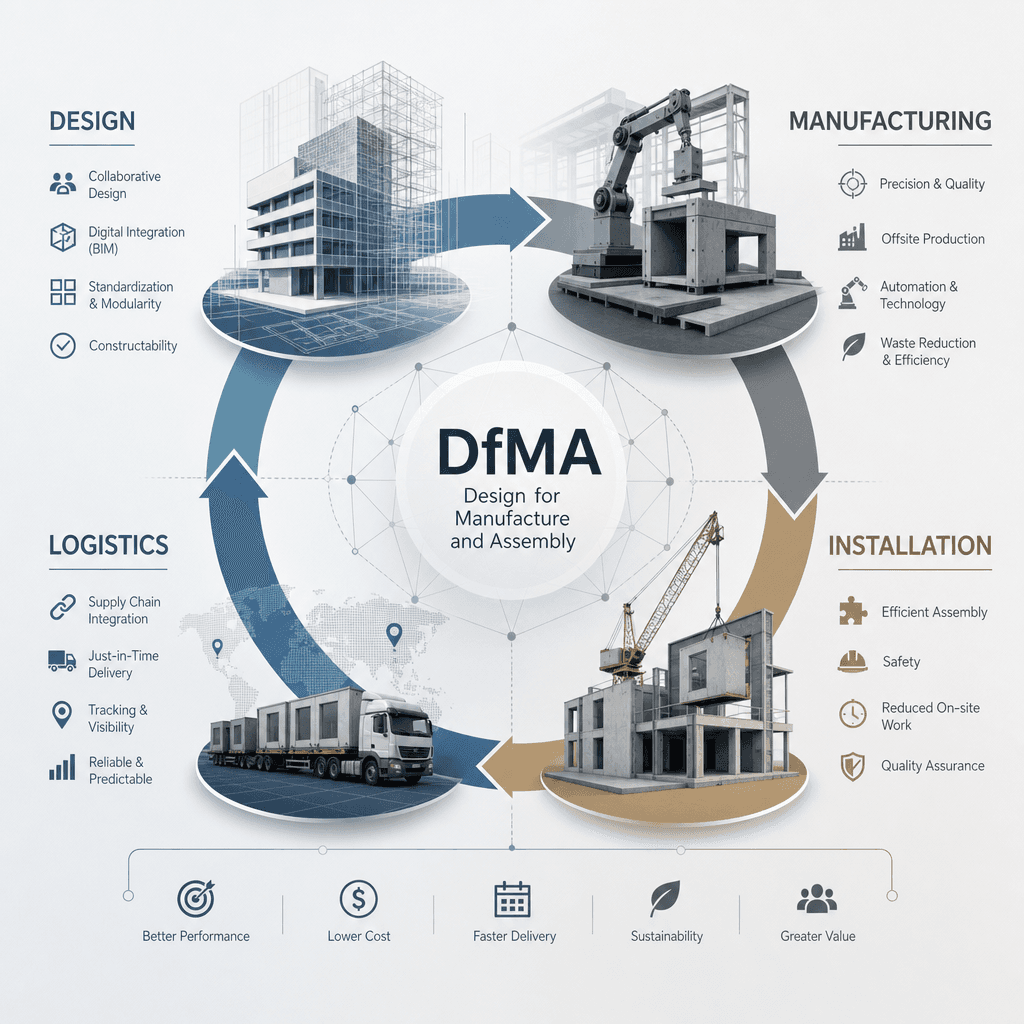
DfMA Is Not Just a Design Method, It Is an Operating Model
15 September 2026 · 2 min
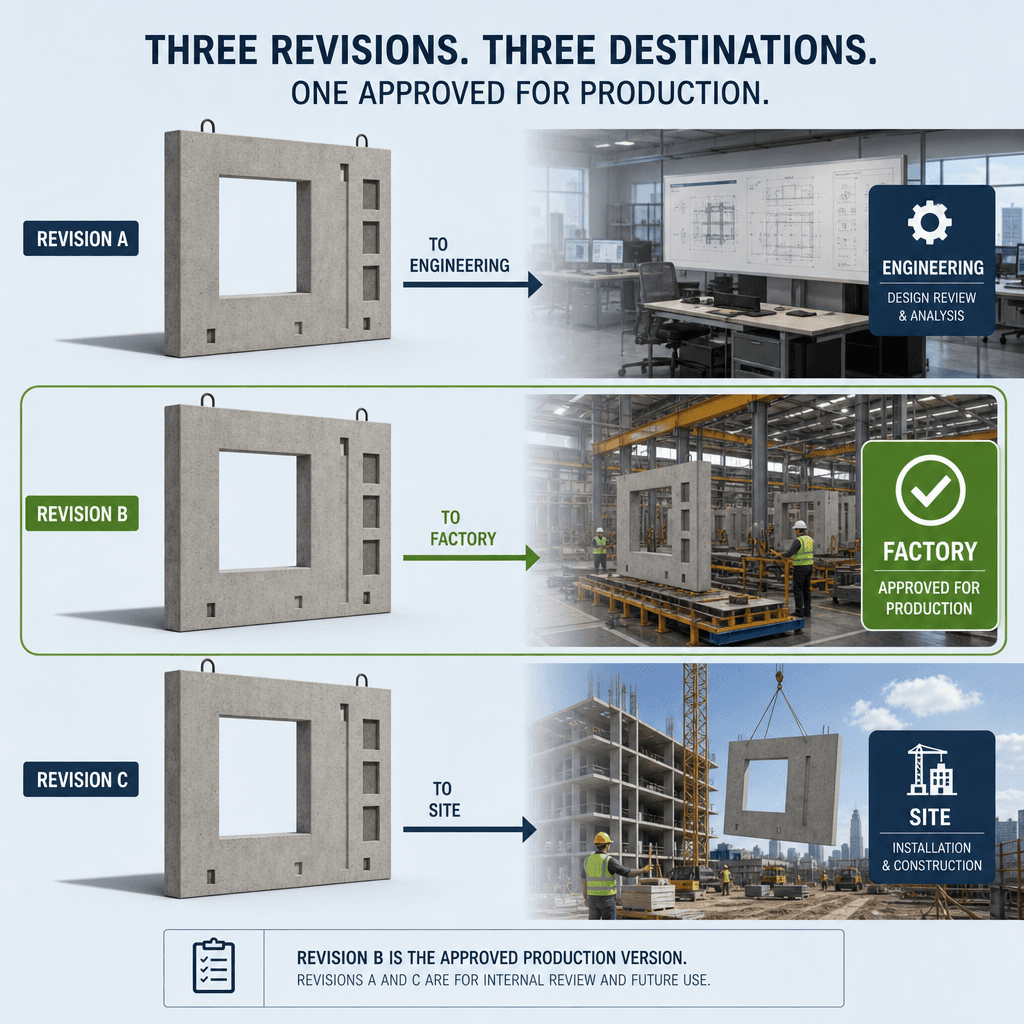
One Panel, Three Versions: Unraveling the Hidden Risks in Precast Production
15 September 2026 · 2 min