9 June 2026 · 5 min read
The Rise of Modular Construction and Prefabrication in the Precast Concrete Industry
By Jim Mills
Modular construction and prefabrication are rapidly reshaping the construction industry. As project schedules become tighter, labor shortages continue to challenge contractors, and clients demand higher quality and predictability, the adoption of off-site construction methods has accelerated worldwide.
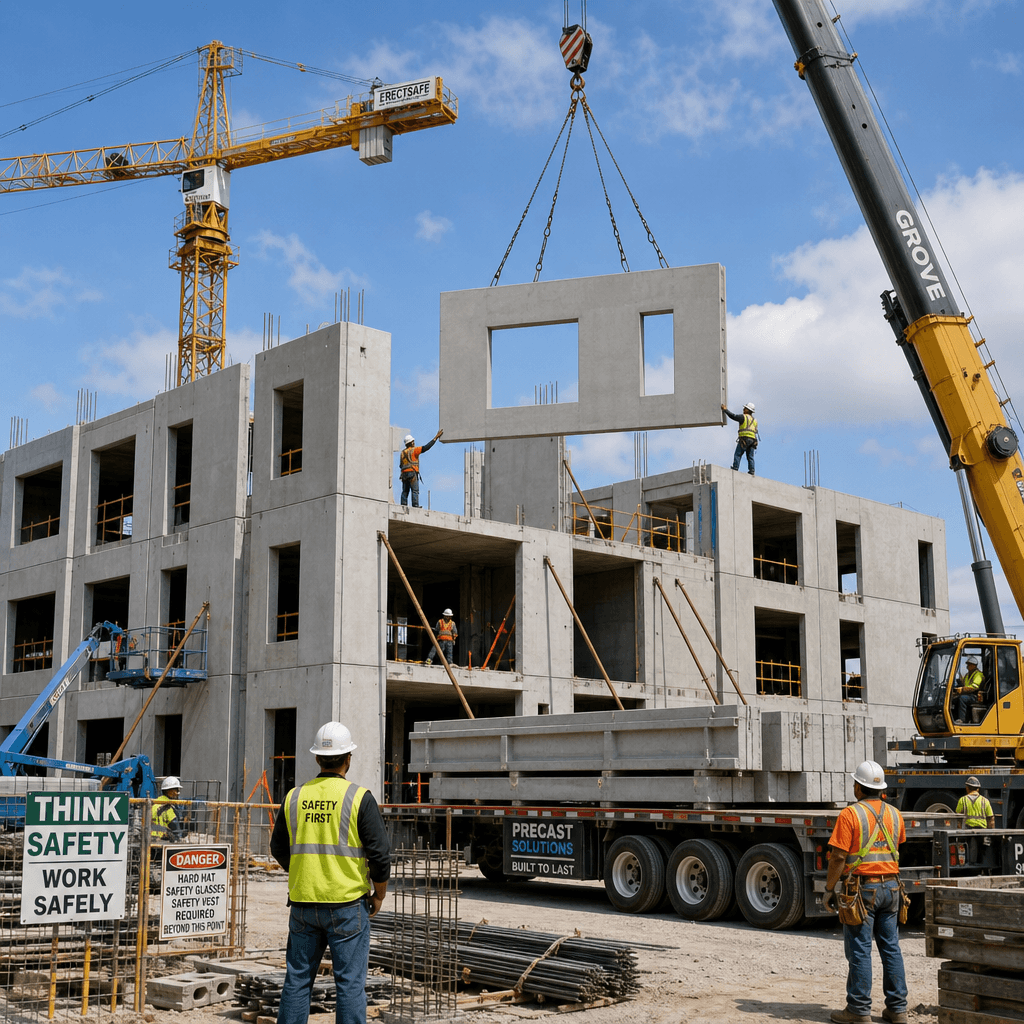
Within this transformation, precast concrete has emerged as a critical enabler. By combining factory-controlled manufacturing with digital design and coordination processes, precast solutions help deliver projects faster, safer, and with greater consistency than traditional construction methods.
As the industry continues to evolve, understanding the role of modular construction is becoming essential for manufacturers, engineers, and contractors looking to remain competitive.
Understanding Modular Construction and Prefabrication
Prefabrication refers to the process of manufacturing building components in a controlled factory environment before transporting them to the construction site for installation.
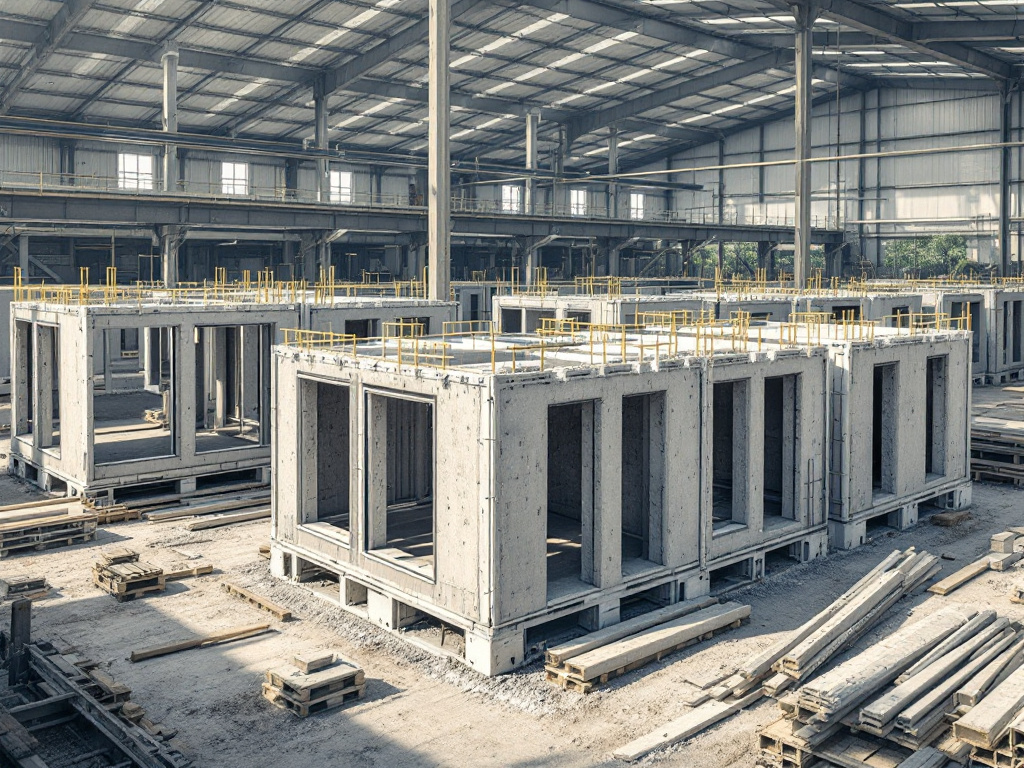
Modular construction takes this concept a step further by producing complete sections or modules of a building off-site. These modules can include structural elements, walls, floors, and even fully finished spaces that are assembled on-site.
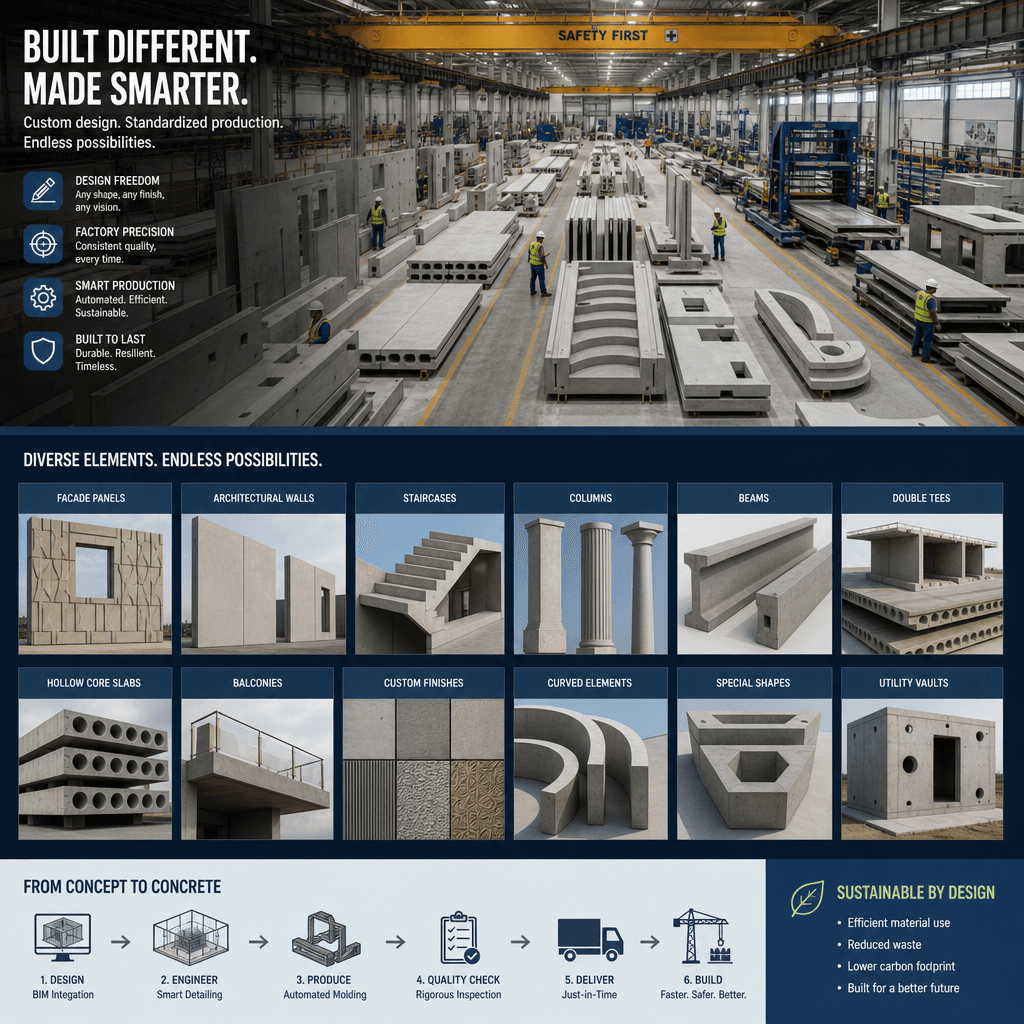
Precast concrete plays a central role in both approaches. Wall panels, beams, columns, hollowcore slabs, bridge components, and floor systems can all be produced with high precision in a manufacturing facility and delivered ready for installation.
This industrialized approach reduces dependence on site-based construction activities while improving predictability throughout the project lifecycle.
Benefits of Modular Construction in Precast Concrete
Faster Project Delivery
One of the primary advantages of modular construction is speed.
Since manufacturing occurs simultaneously with site preparation and foundation works, project timelines can be significantly reduced. Weather-related delays also have less impact because production takes place in controlled factory conditions.
For developers and contractors, shorter construction programs often translate directly into earlier project completion and faster returns on investment.
Improved Quality and Consistency
Factory-controlled production environments allow manufacturers to maintain stricter quality standards than are typically achievable on-site.
Standardized processes, specialized equipment, and repeatable workflows help ensure consistent dimensions, finishes, and structural performance across every element produced.
The result is fewer defects, reduced rework, and improved overall project quality.
Enhanced Sustainability
Sustainability is becoming an increasingly important factor in construction decisions.
Prefabrication reduces material waste by optimizing manufacturing processes and minimizing excess consumption. Factory production also enables better recycling and reuse of materials.
In addition, fewer site deliveries, reduced on-site activities, and shorter construction durations contribute to lower environmental impacts throughout the project.
Challenges in Adopting Modular Construction
Initial Investment Requirements
Transitioning toward modular construction often requires significant investment in manufacturing facilities, equipment, technology, and process development.
For many organizations, these upfront costs can create barriers to adoption, particularly when traditional construction methods are deeply established.
Design and Customization Constraints
While modular systems excel in repeatability and efficiency, they can introduce design constraints if not considered early in the project.
Successful modular projects require close coordination between architects, engineers, manufacturers, and contractors from the earliest design stages.
Without proper planning, design changes later in the project can become more complex and costly.
Workforce Training and Cultural Change
The shift from traditional construction methods to industrialized construction requires new skills and workflows.
Design teams, production staff, and site crews must adapt to digital processes, advanced coordination practices, and new manufacturing methodologies.
Organizations that invest in training and change management are typically better positioned to realize the full benefits of modular construction.
Innovations Driving the Shift
Advanced Manufacturing Technologies
Automation, robotics, and digital manufacturing technologies are improving productivity and precision within precast facilities.
These innovations allow manufacturers to produce complex elements more efficiently while maintaining high quality standards.
Building Information Modeling (BIM)
BIM has become one of the most important technologies supporting modular construction.
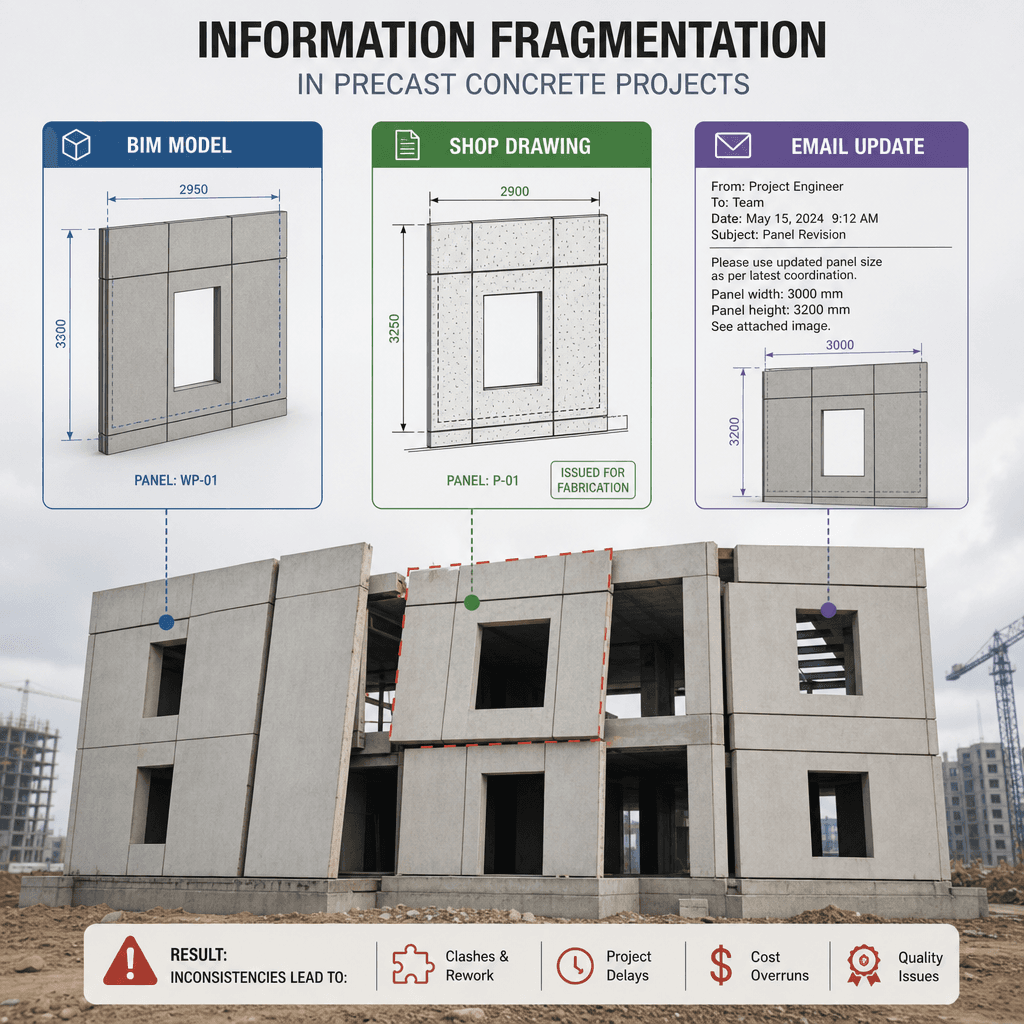
Accurate digital models enable teams to coordinate structural systems, identify clashes, validate constructability, and optimize production workflows before manufacturing begins.
For precast projects, BIM provides a direct connection between design, detailing, production, logistics, and installation.
This integrated approach reduces errors, improves collaboration, and helps ensure that manufactured components fit precisely when delivered to site.
Future Outlook for the Industry
The adoption of modular construction is expected to accelerate over the coming decade.
Growing demand for faster project delivery, increasing labor shortages, sustainability targets, and advances in digital technology are all contributing to this trend.
Future developments are likely to include:
- Greater integration of automation and robotics.
- Increased use of digital twins and data-driven manufacturing.
- Enhanced supply chain coordination.
- More sophisticated BIM-to-production workflows.
- Expansion of modular solutions into new project sectors.
Companies that invest early in these capabilities will be better positioned to capture opportunities in an increasingly competitive market.
Conclusion
Modular construction and prefabrication are transforming how precast concrete projects are designed, manufactured, and delivered.
By improving speed, quality, sustainability, and predictability, these approaches are helping the construction industry address many of its most pressing challenges.
While adoption requires investment, planning, and organizational change, the long-term benefits are becoming increasingly difficult to ignore.
For manufacturers, engineers, and contractors seeking to improve efficiency and remain competitive, modular construction represents a strategic opportunity that is likely to define the future of the industry.
Ready to Explore Modular Construction for Your Next Project?
At Biminglabs, we help precast manufacturers, engineering firms, and contractors leverage BIM modeling, detailing, and shop drawing services to support successful modular and prefabricated construction projects.
Whether you're looking to improve coordination, streamline production, or reduce costly rework, our team can help.
Contact Biminglabs today to discuss how digital workflows and precast expertise can support your next project.