25 November 2025 · 2 min read
The Hidden Margin Leak No One Tracks in Precast Projects
By Jim Mills

In the intricate world of precast concrete projects, financial efficiency is the keystone to success. Yet, hidden margin leaks remain an elusive threat to profitability. Studies across precast and construction projects show rework consumes between 7–12% of project margin, often without being recorded as 'rework'. This staggering insight underscores the importance of vigilance and proactive measures.
Drawings and Models Drifting Apart

As projects progress, it's common for drawings and models to drift apart. This divergence can lead to execution errors and increased project costs. Imagine an architect's vision not aligning with the engineer's interpretation, such misalignments directly impact timelines and budgets, creating a ripple of inefficiencies throughout the project lifecycle.
Email-Based Approvals Getting Lost
Relying on email for approvals is akin to navigating with an outdated map. Emails can easily become buried, leading to missed communications and delayed decisions. These micro scenarios not only disrupt workflows but also impact design accuracy, production pacing, and deadline adherence.
Late Clash Feedback Causing On-Site Improvisation
Detecting clashes late in the process often forces teams to improvise solutions on-site, a costly and time-consuming fallback. The extended project timelines, and additional labor expenses, all contributing to the project's financial bleed.
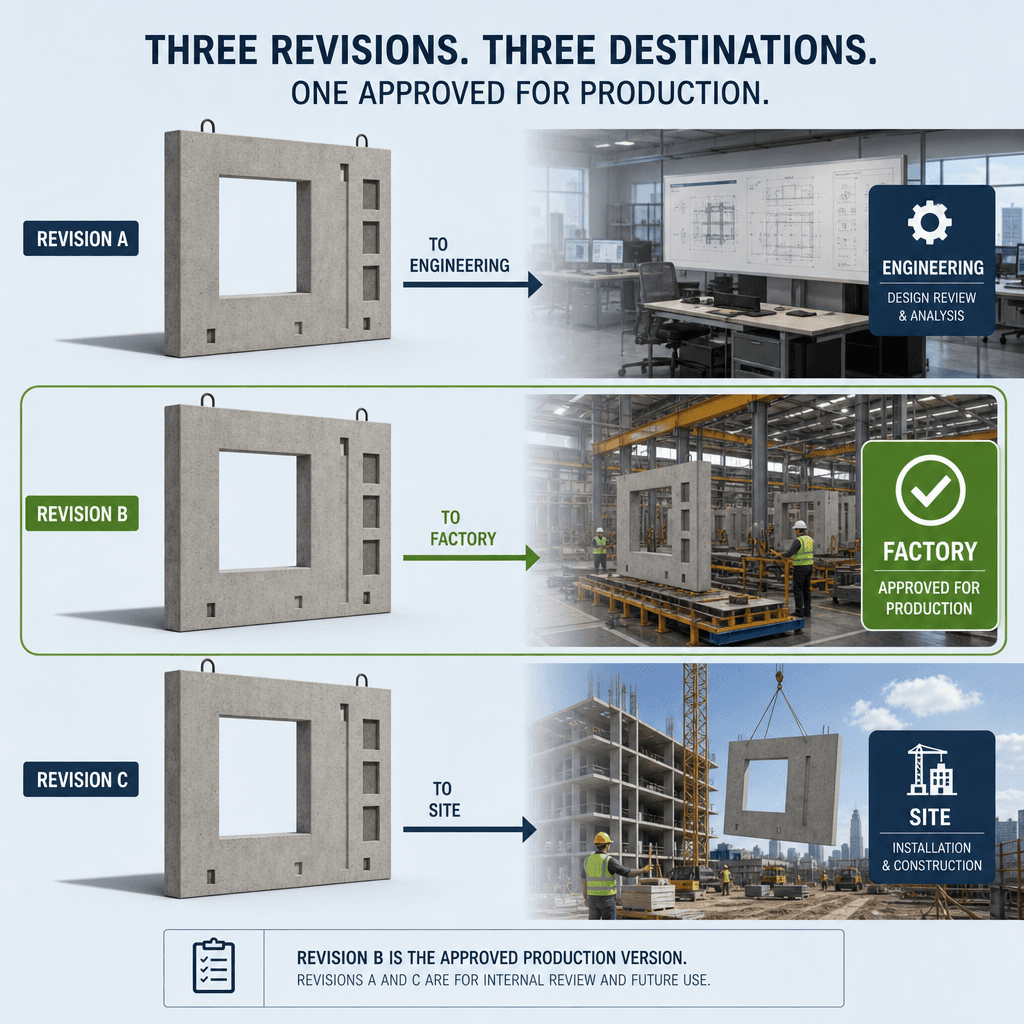
Production Working with Outdated Statuses
Operating on outdated status information wreaks havoc on production phases like casting, assembly, and logistics. This "status gap" leads to operational inefficiencies and an accumulation of hidden costs, compounded every day it's left unaddressed.
Small Issues Amassing Into a Major Cost Center
Individually minor, these issues collectively contribute to significant financial loss, accounting for that unrecorded 7–12% of margin erosion. These aren't often logged as rework, yet the impact on profitability is undeniable.
Solutions: Model-First Coordination Workflow
To counter these inefficiencies, a model-first coordination workflow emerges as a robust solution. By harmonizing processes, ensuring real-time updates, and implementing rigorous version control, teams can make swift decisions, reducing unpredictability and driving efficiencies across projects.
Consider implementing visual aids such as a mini workflow diagram, a before/after scenario comparison, and a table contrasting Email vs Model-first coordination to illustrate improvements.
How Much Are These Hidden Issues Costing You?
Evaluate the health of your current operations with these reflective questions:
- Are design approvals still handled via email in your team?
- Do you frequently encounter unrecorded rework?
- How often does on-site improvisation delay your timelines?
- Is your team aligned on the latest project statuses?
These insights serve not only as a self-assessment but also highlight the areas ripe for improvement.
Final Thoughts
Scrutinizing and optimizing your workflow can safeguard against hidden margin leaks. A rigorous examination of processes and adopting tools like a model-first approach can enhance operational clarity and financial returns.
Tags
More from the blog