29 September 2026 · 2 min read
DfMA Is Not Just a Design Method, It Is an Operating Model
By Biminglabs
DfMA Is Not Just a Design Method, It Is an Operating Model
-
Introduction
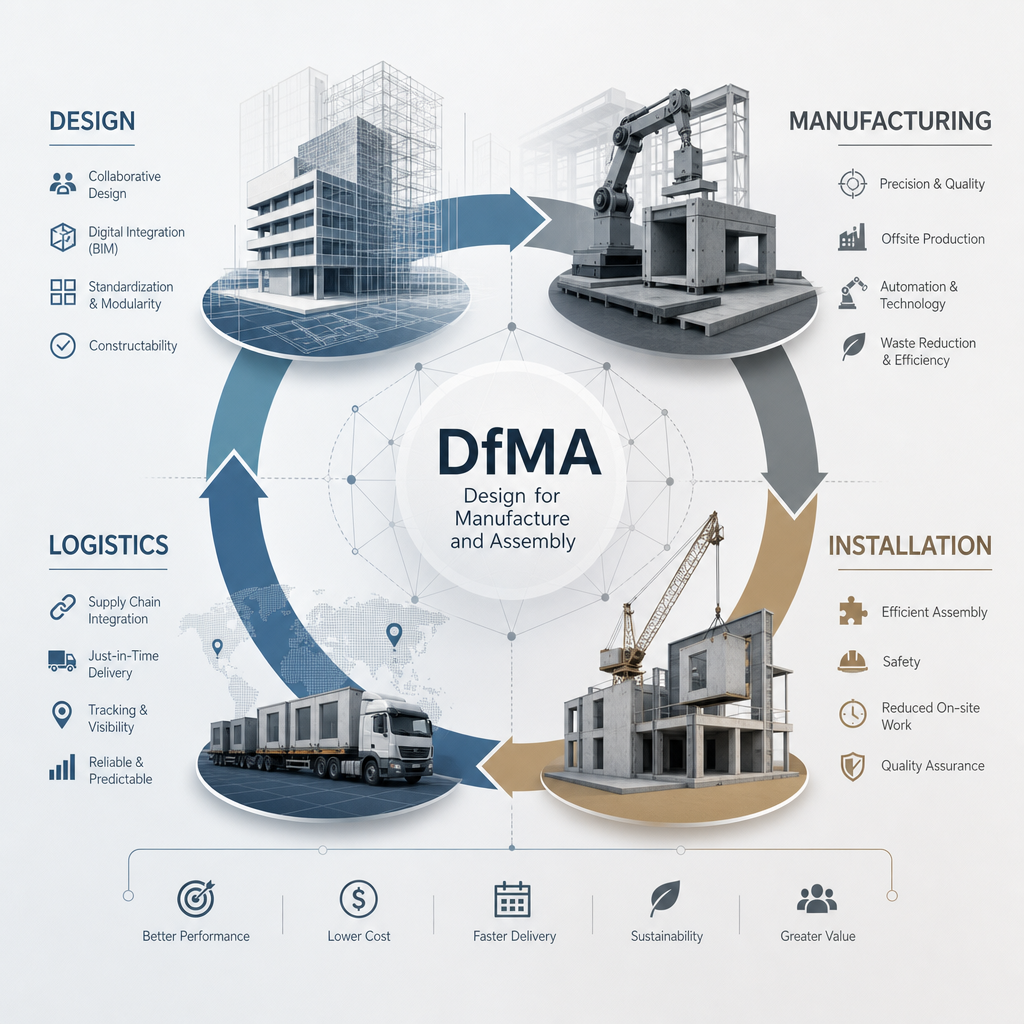
Design for Manufacture and Assembly (DfMA) often comes to mind as a method applied by engineers towards the latter stages of design. However, for those engaged in industrialized construction, this methodology transcends its traditional boundaries, emerging as a comprehensive operating model. Rather than strictly making products easier to produce, DfMA provides a holistic framework that affects every phase, from the earliest design decisions through to engineering, manufacturing, logistics, and installation. -
The Role of DfMA in Industrialized Construction
In the industrialized construction paradigm, DfMA’s scope extends well beyond the traditional design methods. It is a strategic approach that has the potential to influence early design decisions and provides continuous oversight throughout engineering, manufacturing, logistics, and installation. Such an integrated approach allows for optimized end-to-end processes, paving the way for enhanced alignment and collaboration. -
DfMA's Impact on the Operating Model
Implementing DfMA means designing the entire delivery process from how structures will actually be produced and assembled. This coordination enhances collaboration across all stages of the project, which results in streamlined timelines and reduced costs. The holistic approach minimizes the risk of misalignments and inefficiencies, promoting a synchronized workflow across the board. -
Case Studies and Examples
Real-world case studies showcase DfMA as an operating model in action. Several prominent construction projects have adopted DfMA, revealing improvements in efficiency, precision, and inter-stage coordination. Precast concrete projects, in particular, have benefitted from a comprehensive DfMA strategy, achieving smoother project flow and optimized resource utilization. -
Challenges and Considerations
Despite its benefits, there are misconceptions surrounding DfMA, such as viewing it merely as an assembly simplification tool. For successful adoption, organizations must shift their mindset and appreciate DfMA as a strategic approach. Aligning teams and training personnel to handle this methodology will ensure seamless integration into the broader operating model. -
Conclusion
To sum up, DfMA isn’t confined to the traditional design phase but offers a systematic operating framework for modern construction. Those wishing to harness the full potential of DfMA should consider how it can shape entire project lifecycles for better efficiency, cost savings, and synergy between stages. Reach out to Biminglabs for expert guidance on implementing DfMA in your projects and take the first step towards streamlined, effective construction processes.
Tags
More from the blog